Read summarized version with
Did you know you can drive highly targeted traffic to your landing page and convert more visitors for FREE?
If not, you’re leaving cash on the table.
Using landing page SEO, you can improve your landing page’s ranking in the SERPs and drive highly targeted search traffic to your page. And unlike PPC campaigns, you don’t have to pay for it!
But how to make your landing page SEO-friendly so it ranks higher in the SERPs? This guide is here to help.
Below, you’ll find practical SEO tips that’ll help you optimize your landing pages for searches. From performing keyword research to building backlinks, this guide has everything you need to drive free traffic to your landing page.
What Is An SEO Landing Page?
An SEO landing page is a web page designed and optimized (specifically ) to rank higher in the SERPs and transform search traffic to leads and paying customers down the line.
Unlike regular landing pages, whose primary traffic source is paid ads, an SEO landing page relies on organic traffic via search engines.
Here’s an example of an SEO landing page from Zoho:
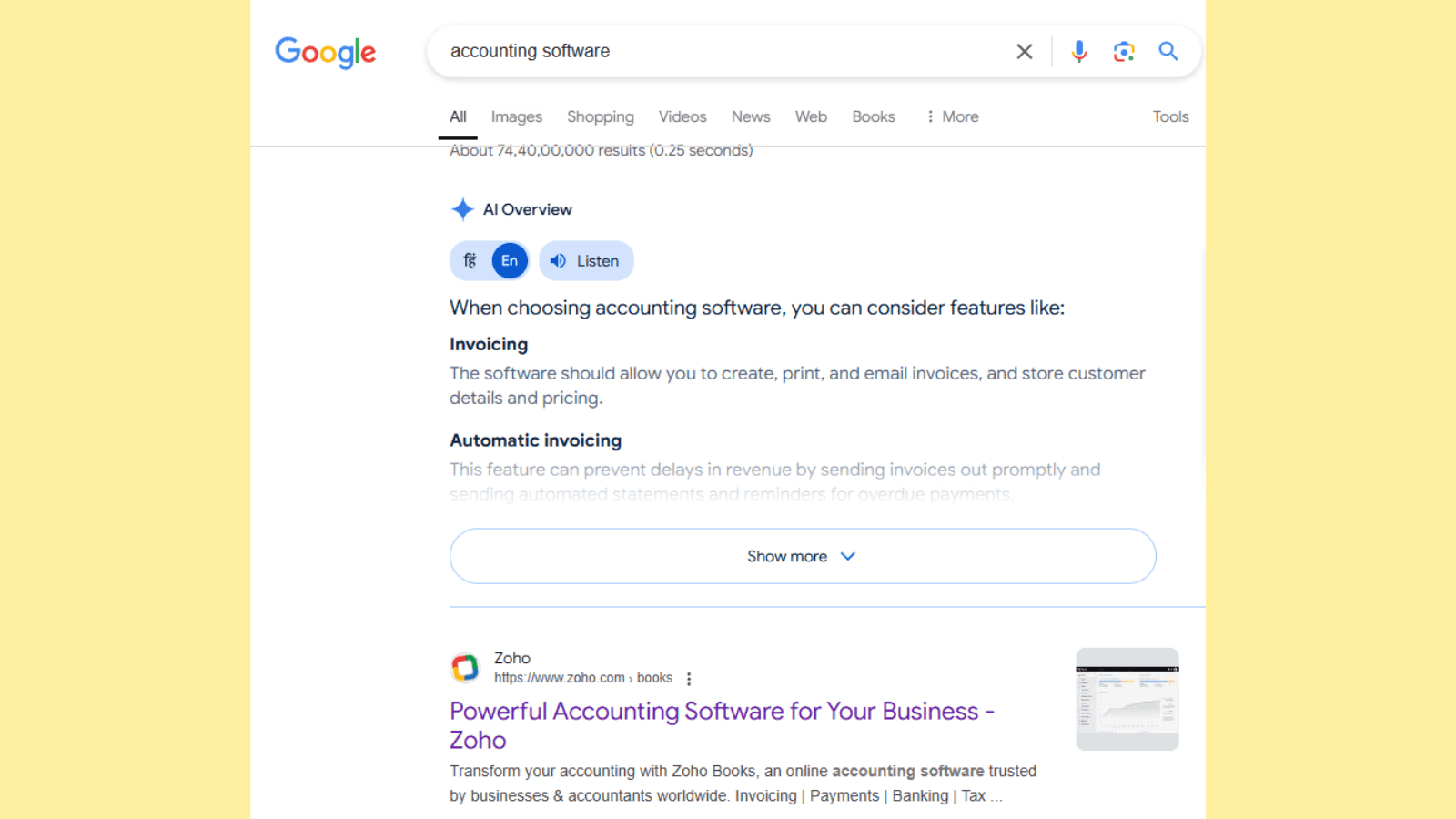
On searching for “accounting software”, Zoho’s landing page that promotes its accounting software, Zoho Books, pops up.
You can open the landing page (using this link) and be sure of the fact that the landing page is different from the homepage.
Is an SEO Landing Page even a Feasible Concept?
To get an answer to this question, you need to understand why the feasibility is in question.
If you look at the fundamentals of landing pages, you’d know:
Landing pages are meant to be brief.
Landing pages are supposed to direct visitors to your CTA without distractions.
However, landing page SEO means:
More content, more links, and multiple CTAs.
And all this translates to more distractions.
So, if you look at it from a broader perspective, optimizing landing pages for SEO would be counterproductive, i.e., reducing the effectiveness of landing pages.
Now, the question is, can you create a landing page that not only ranks well but also converts the traffic it drives into paying customers? Yes, it is possible, provided that you proceed with caution. And that’s what you’ll learn in this article.
But before we dive any deeper, let’s briefly discuss why SEO is essential for landing pages.
Why Do You Need SEO For Your Landing Page?
One of the most basic benefits of SEO for landing pages is free traffic.
Say you want to capture leads for your content marketing course, and you’re offering an e-book as a lead magnet. Now, you have two primary sources of traffic:
Paid ads or PPC
Organic reach or SEO
With PPC or pay-per-click campaigns, you’ll have to pay for every click your ad receives, regardless of whether the visitor converts. The moment you stop paying, you stop getting clicks and, thus, visitors.
With SEO, you will get organic traffic. While you may invest resources in continuous SEO practices, you’re not paying anything directly. Unlike PPC, you keep getting visitors to your landing page long after you stop actively investing in SEO (provided the landing page is live).
In a nutshell, performing SEO for your landing page can help you:
Drive more traffic that is free to your landing page.
Increase the number of conversions.
Note. For a long time, marketers have thought of landing pages as a short-term strategy. And this makes perfect sense for one-off campaigns.
However, if you’re running a campaign for a few weeks or months each year, you should start considering landing pages as a long-term strategy.
How?
By not taking down your landing page and optimizing it for SEO.
When a landing page remains online and is optimized for SEO, it continues to generate results for you.
That’s why many businesses partner with a Top-rated SEO ecommerce agency to identify and target the right set of transactional keywords. Such agencies bring in-depth research, proven frameworks, and data-driven insights to maximize conversions."
After this "and they see your landing page, they are more likely to buy.
Now that you understand the importance of landing pages SEO, let’s learn how you can optimize your landing pages to rank higher.
7 Ways To Optimize Your Landing Page With SEO
Here are some practical tips to help you perform Landing page SEO and reap the benefits of free organic traffic:
1. Perform in-depth keyword research
Every SEO strategy starts with keyword research. And landing page SEO is no exception.
You need to perform in-depth keyword research to identify the bottom of the funnel or transactional keywords. Why?
Because people searching for transactional or BOFU keywords have a transactional intent i.e. they are more likely to convert. And, perhaps that’s the primary purpose of a landing page, right?
Say, the goal of your landing page is to convince your visitors to sign up for the free trial of your SEO automation tool.
Now, a person who is searching for “What is SEO” has an informational intent. They are in the TOFU or the awareness stage.
If you optimize your landing page for keywords the TOFU audience is searching for, your conversion rate will suffer as you’re not offering what they need.
However, if a person is searching for transactional or BOFU keywords “buy SEO software” or “free trial SEO software”, and they see your landing page, they are more likely to buy.
How can you find BOFU or transactional keywords?
Try SemRush.
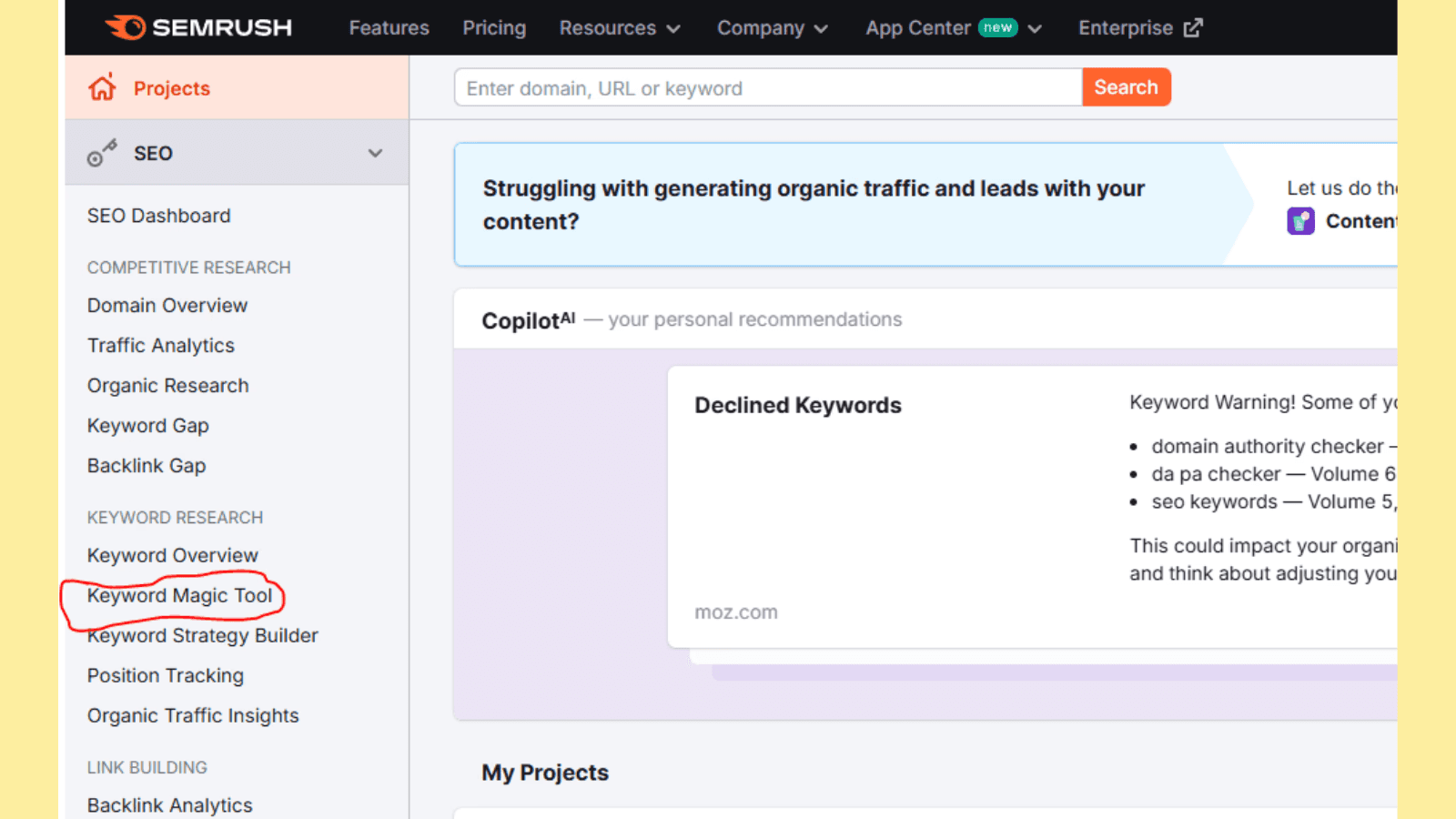
Visit the website and open the Keyword Magic Tool on the left side of the page:
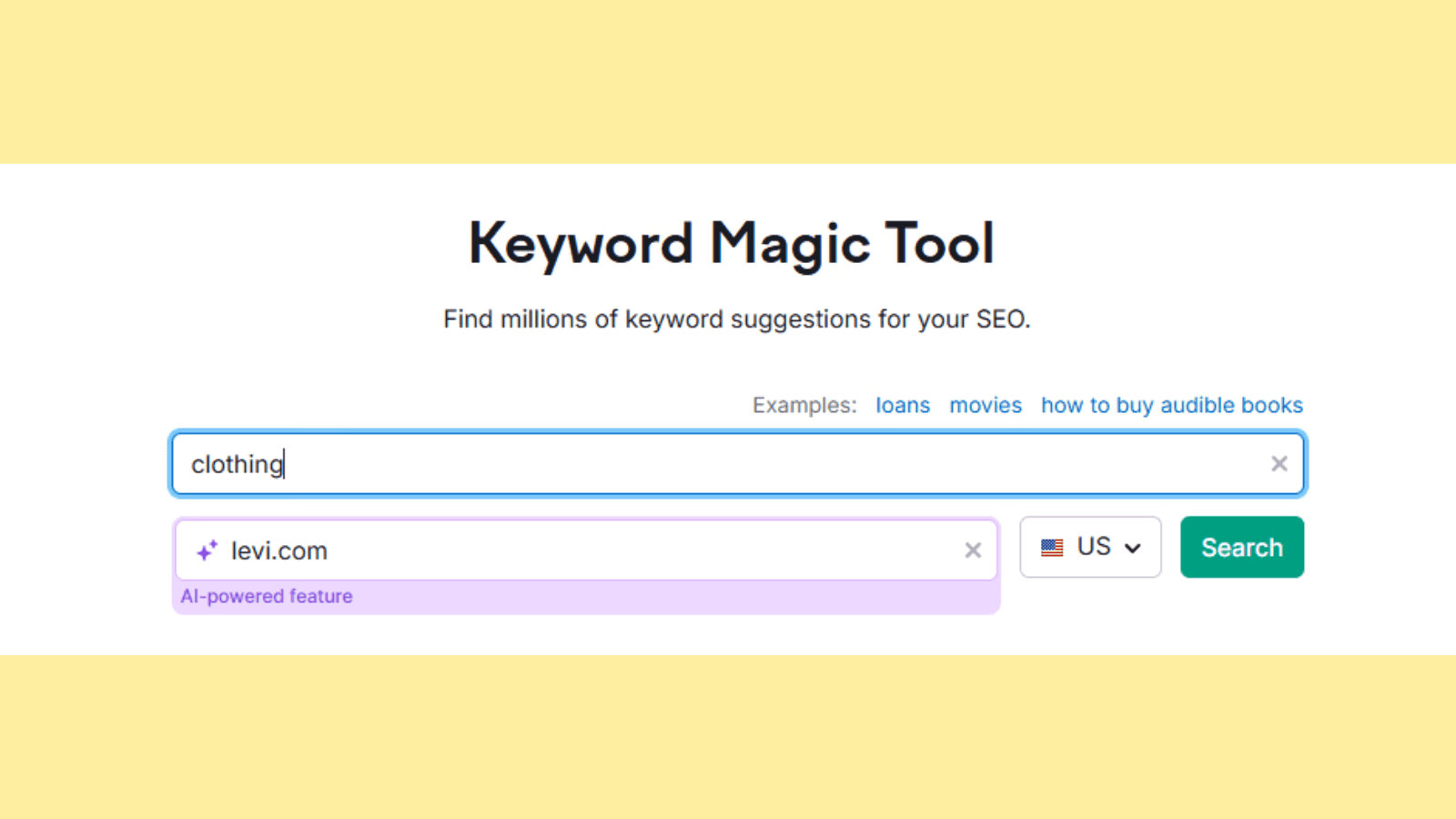
Enter the keyword that describes your business, and then enter your domain. We are using Levi’s for this example:
Hit the search button, and you’ll see a list of several keywords.
Click the intent option and check transactional intent. Doing this will help you identify the keywords that have a transactional intent. You can further narrow down your results by keyword difficulty.
2. Create high-quality content
Once you have the keywords ready, start creating high-quality content.
However, the dilemma here is:
You need to write a lot of content to be able to rank.
At the same time
You need to be brief as more content means more distractions and landing pages are known for brevity (usually).
The solution? Strike the right balance. Here’s how:
Include the key selling points, unique value proposition, and your CTA above the fold. The fewer distractions you have in this section, the better.
Now, to please the SEO gods, you’ll need to include plenty of content, which you can add further down the page. However, one thing that you cannot compromise with is the quality/value.
The content you add to the page must be legitimately valuable and not an extension of your sales pitch. It should ideally attract backlinks. Otherwise, you cannot expect your landing page to rank higher for the desired keywords.
In addition to the above, include elements like videos, images, and infographics to make the content even more valuable and engaging.
Here are some tips to help you with your content:
Make sure you write for your audience. Try to avoid jargon and get right to the point.
The content of your landing page should be relevant to users’ search queries and address their pain points.
Don’t talk about the features alone. Discuss the benefits of those features. This will help your audience connect better.
Use customer reviews or stories as social proof. This helps build trust and gives a final push to make the purchase.
Link reputable sources wherever required to sound more authoritative and credible.
3. Keep User Intent in Mind When Designing Landing Pages
Matching your landing page with the users’ search intent is important for so many reasons.
For starters, your users get exactly what they’re looking for or expecting. And this often leads to conversions.
However, if your landing page fails to meet the intent of your visitors, your visitors will bounce off, negatively impacting your conversions
Primarily, user intent is of four types. Here’s a tabular representation for easy understanding:
But how can you design landing pages that meet the intent of your visitors? Here’s how:
Let’s assume, for the sake of this example, you have an SEO automation tool and want to target individuals with a buying intent.
Now, stop for a minute and think like your ideal customer who wants to make the final buying decision. What would your ideal landing page look like?
Not good at imagining?
Simply search for the keywords you’re targeting on Google. And since we asked you to research and target transactional keywords, you can use this keyword “SEO automation free trial”:
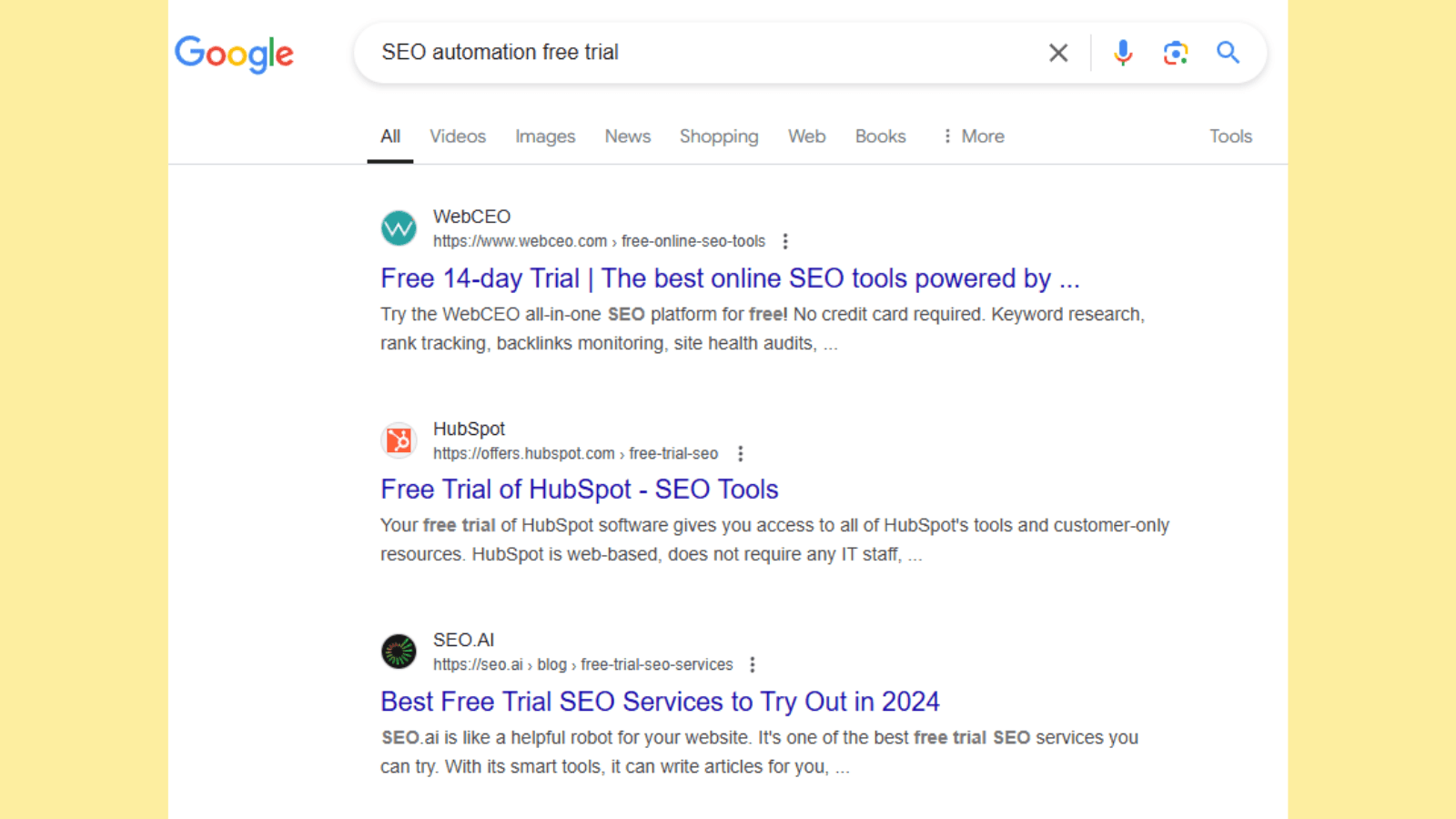
You can check out each landing page, analyze how they’ve designed each element, and get inspiration.
Take HubSpot’s example:
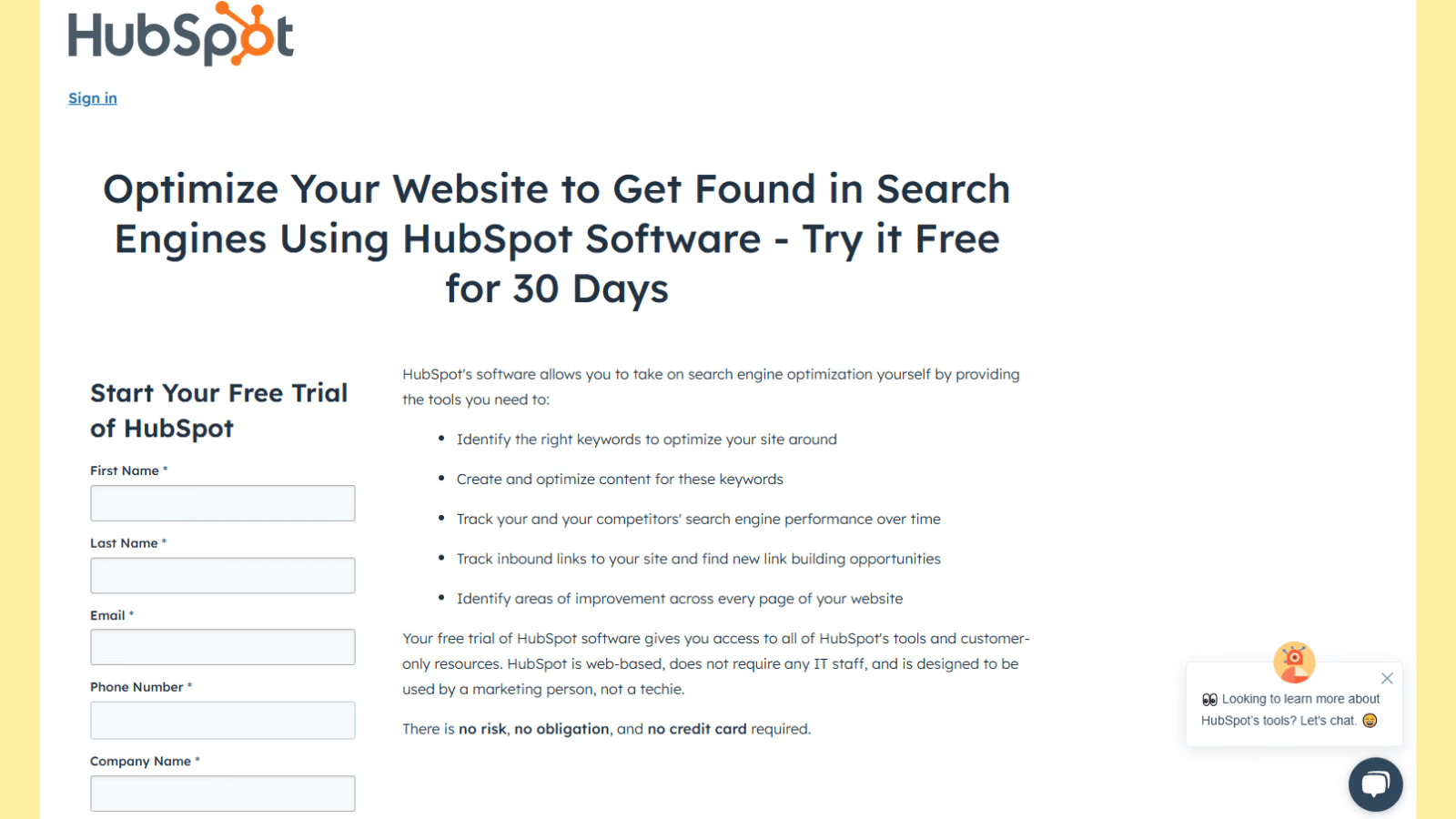
You can notice a clean landing page that gives all the necessary details right off the bat.
By entering a few details in the lead gen form, individuals can start their trial.
Also, there is a chatbot in the bottom right which will help the visitors with any queries, providing them the assurance they need to make the final decision.
4. Improve your On-Page SEO Elements
On-page optimization is the easiest and one of the most important parts of landing page SEO.
Here’s how you can optimize each on-page SEO element for success:
1. Meta Data
Meta Data comprises two things:
Meta Title: This indicates the title of the page. And a meta title or title tag is the first thing users see if your page successfully ranks in the SERPs. Here’s an example:
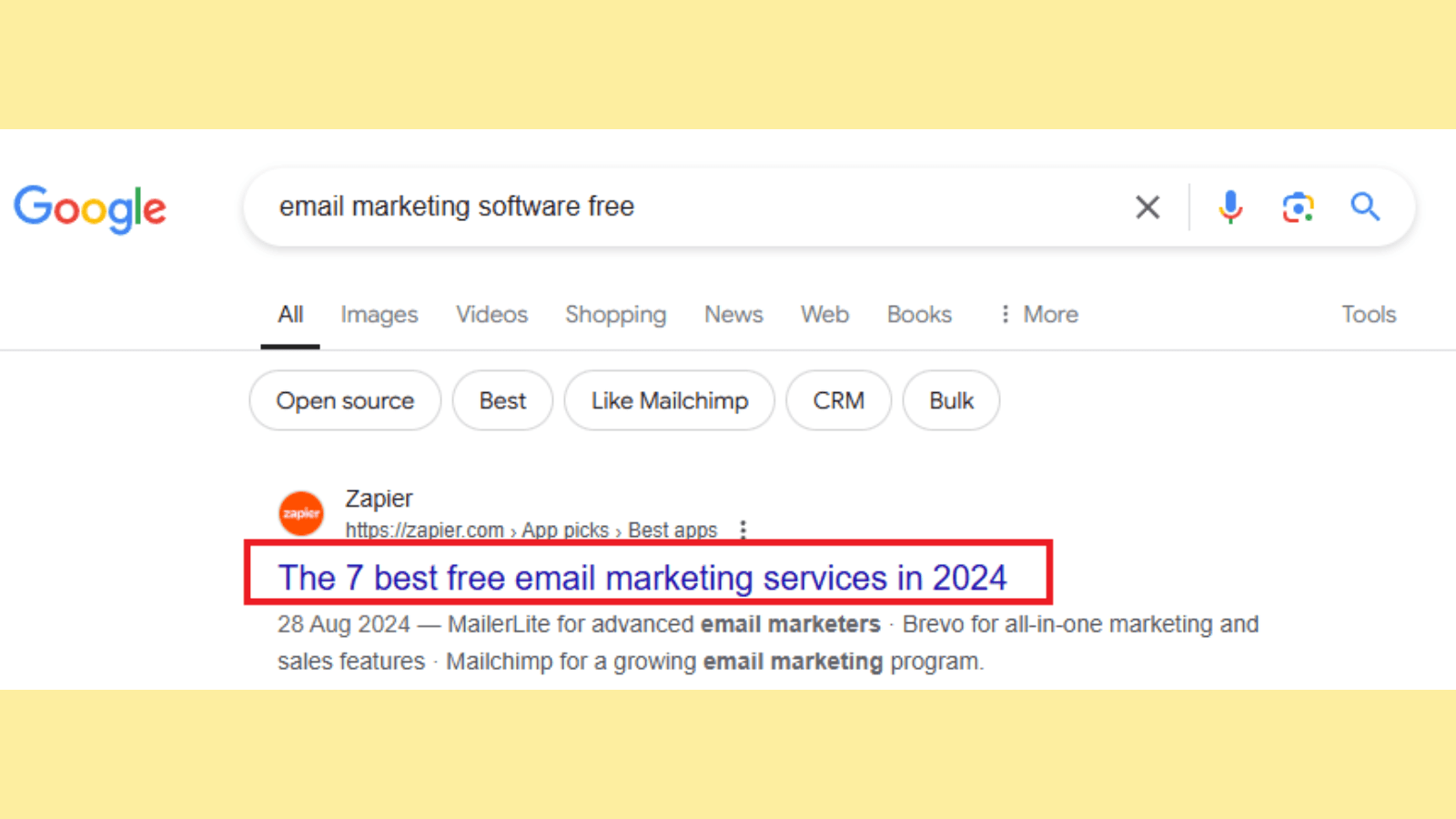
The text highlighted in red is the meta title.
As a meta title is the first thing users see, it should be clear, and compelling and include the keyword you’re targeting. Also, it would be better if you add the keyword at the start.
Meta description: Meta description is the text that appears under the meta title. It tells the users what the page is all about. Here’s an example:
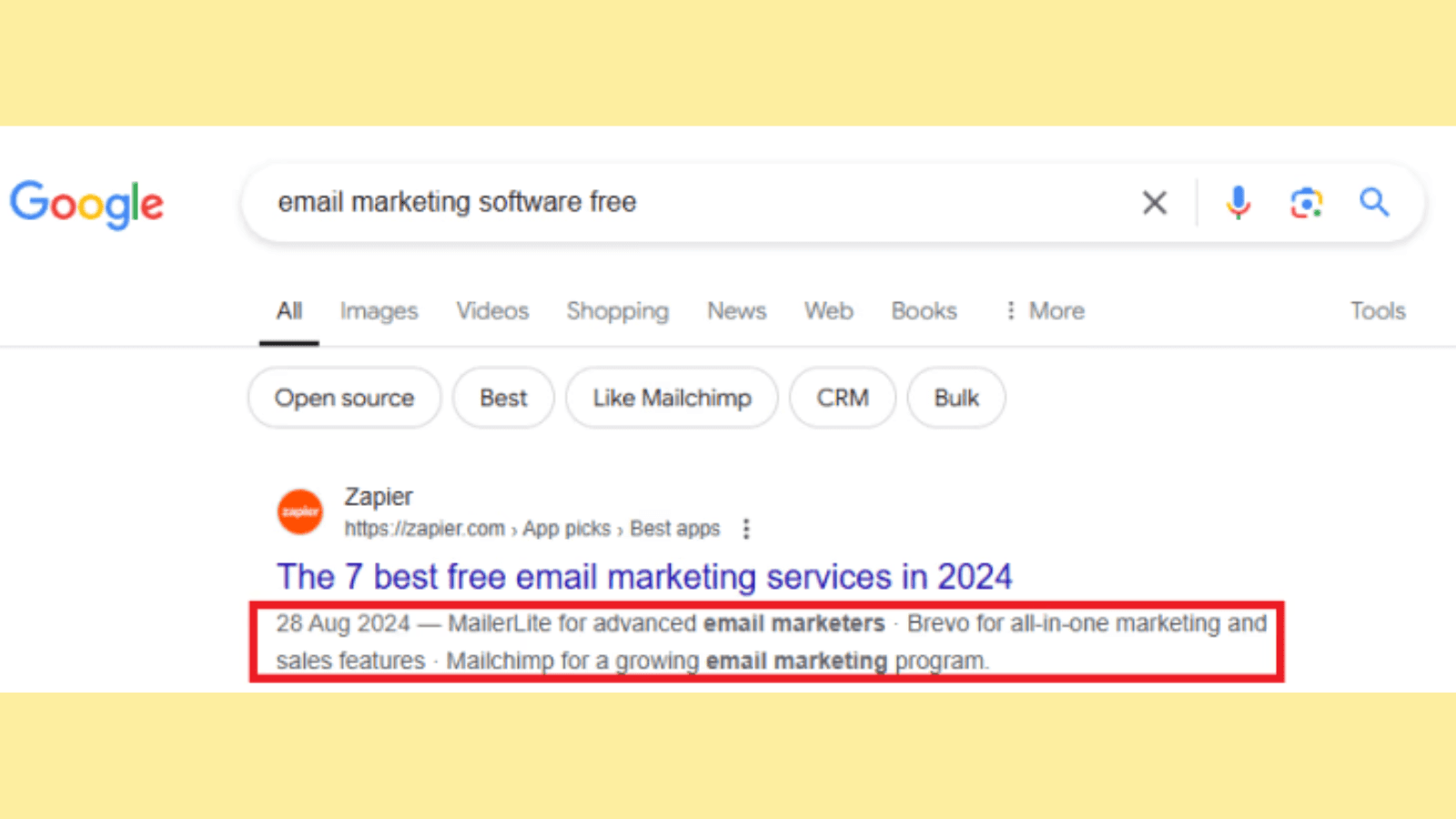
The text highlighted in red is the meta description.
A meta description can convince the reader to click or push them away.
So, make sure to be very careful when writing your meta description. Similar to the title tag, don’t forget to include the target keyword. And as Google is known to bold the keyword the user is searching in your meta description, it can increase the CTR.
2. Headings
No one, Google, or your audience likes blocks of text. That’s why there are headlines. They break your content into small sections, making it easy for both Google and your users to understand.
Use an H1 tag for your page title. And it would be great if your H1 matches the meta title.
You can use H2, H3, and even H4 tags for the rest of the content.
Pro Tip: Try to include keywords in the headings. This is a good SEO practice that'll help you rank.
3. Alt Text
If the images on your landing page don’t load on time, what would you want the users to see?
Anything but an error message. And Alt text helps you do just that.
Alt text is a “text” that describes search engines what the image is about. And this text appears when an image fails to load properly, explaining the image to the user.
4. Internal Links
Add internal links on other pages of your website that point visitors to your landing page and vice versa. Internal linking helps search engines understand site structure and allows users to find more contextual content, which is great for SEO and UX.
Pro Tip: Be subtle with internal links on your landing page. Afterall, you want your visitors to stay focused and not wander off to other pages unnecessarily.
5. URLs
Your landing page URL tells the users and search engines what they’ll find on the page.
Here’s a URL for example: “https://fibr.ai/landing-page/landing-page-best-practices ”
From this URL, it’s clear that the page will talk about the landing page best practices.
In addition to telling what’s there on the page a URL tells search engines about the page structure, which is great for SEO.
To optimize your landing page URL, follow these practices:
Make sure your URL is 50-60 characters long.
Includes your target keywords.
Includes hyphens to separate words
Doesn’t include numbers, if possible.
Use lowercase letters
Pro Tip: Use SemRush’s On-Page SEO Checker to evaluate the performance of your landing page’s on-page SEO.
5. Make your Landing Page Mobile Friendly
Google strongly recommends a mobile version (mobile-friendly version) of your pages as it uses mobile-first indexing to rank pages.
In addition, an analysis found that mobile visitors account for 82.9% of the total traffic received by landing pages. All the more reason to make your landing pages more mobile-friendly.
Here’s how you can do that:
Try using a responsive website design that automatically renders pages on all screens and resolutions without sacrificing user experience.
Try using short sentences and paragraphs and avoid huge blocks of text.
Optimize your videos and images to ensure your page loads quickly on mobile.
Simplify the navigation.
6. Focus on Building Backlinks
Backlinks are the links that drive traffic from other websites to your site.
When you get backlinks from high-authority websites, these links carry the link juice or authority of those websites to your page. Why does it matter? Google considers backlinks as a sign of trust, which is good for SEO.
But why would someone want to link to your landing page? Because you have something extremely valuable or shareable on your landing page. Examples may include whitepapers, e-books, infographics on industry trends, etc.
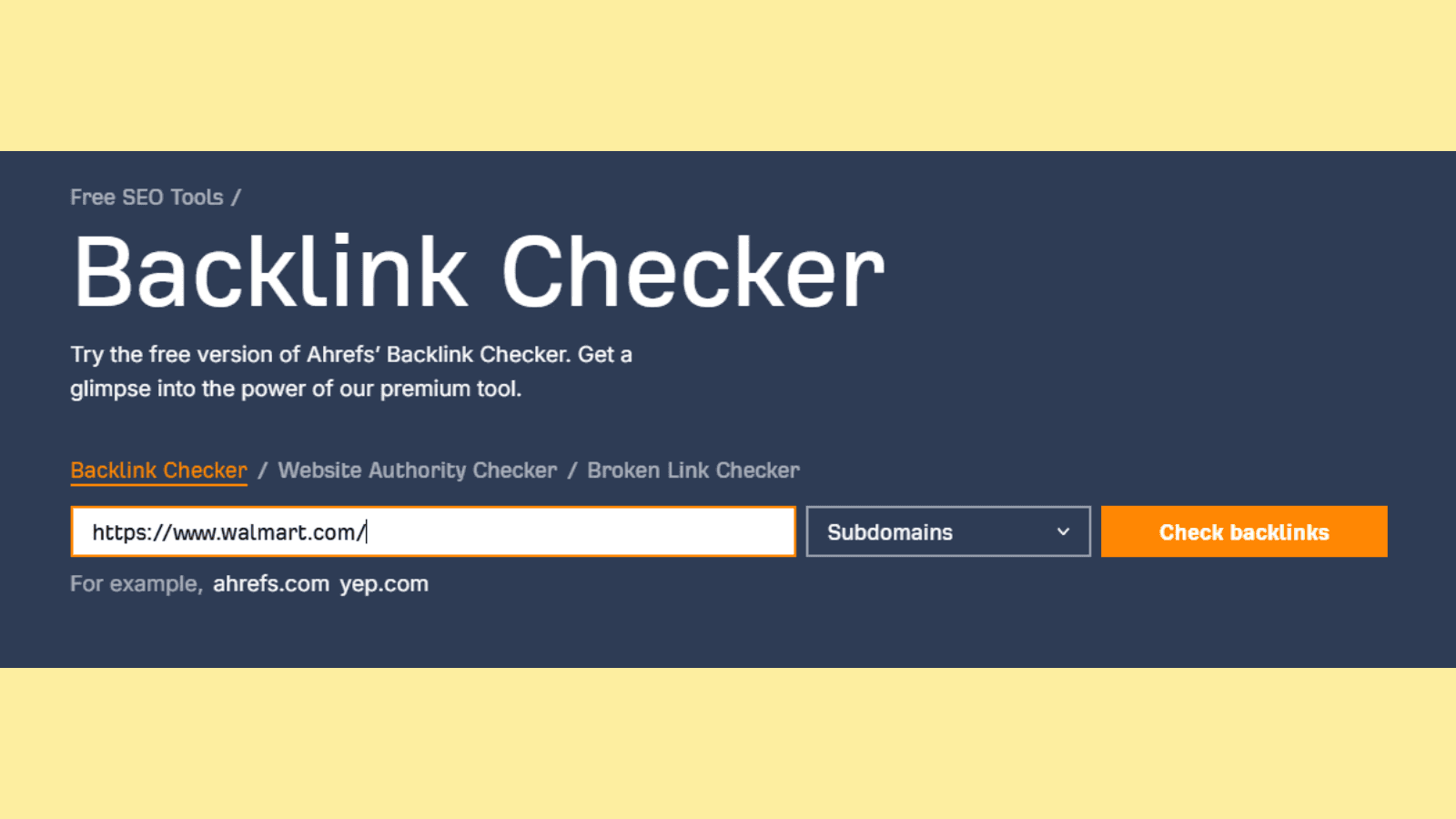
You can use Ahref’s backlink checker to identify link-building opportunities. Just enter the domain of your competitor and hit “Check Backlinks”
Fun Fact: The link we added that takes you to Ahref’s Backlink checker is a live backlink in action. And we linked to it because it’s offering a valuable tool.
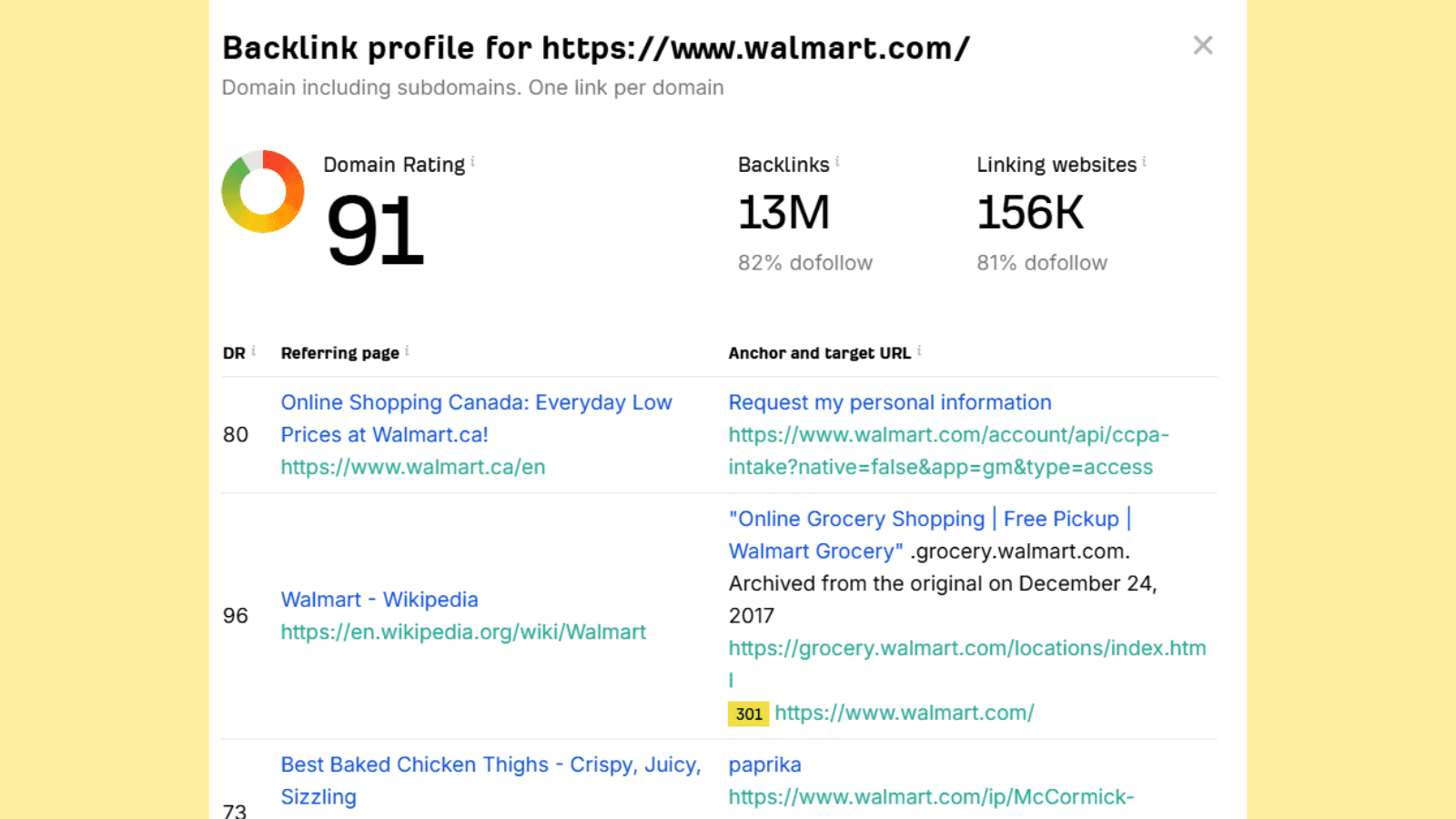
For this example, we’re using Walmart:
You can now see the entire backlink profile of your imaginary competitor. Also, you can check which websites they’re getting backlinks from and approach them with your request.
But not all backlinks move the needle. If your landing page is targeting broad, conversion-focused terms like “SEO software,” it needs backlinks from pages that already rank for similar high intent searches. That is the difference between link building for traffic and link building for revenue. The most effective approach is to work with a specialist link building agency like VH-info that can place links inside relevant, existing content, such as guest posts or listicles built around competitor focused keywords “Ahrefs alternatives” or “Semrush alternatives,” and then point those signals back to your landing page. When done this way, backlinks do more than boost SEO metrics. They drive qualified visitors, support your sales pipeline, and directly contribute to monthly recurring revenue
7. Monitor your Page’s Performance
It’s never a bad idea to monitor your landing page’s performance. You can use tools like Google Analytics or Semrush’s site audit tool to monitor the core web vitals, including page stability, intractability, load time, and other metrics.
Tracking these metrics can help you determine if there’s something wrong with your landing page in technical terms.
Start Optimizing Your Landing Page for Search Traffic Now!
With these Landing page SEO tips, you are all set to create landing pages that are perfectly optimized for SEO. However, if you’d like to make your landing pages more robust, make sure to refer to our detailed articles on:
Landing Page Guide: Detailed guide to help you boost your landing page conversion rate substantially.
Top 13 AI Landing Page Builders: to help you compare and find a reliable AI landing page builder to maximize productivity.
Landing Page Best Practices: to make sure you don’t miss out on any bet practice and publish successful landing pages on the first attempt.
15 Conversion-Killer Landing Page Mistakes: to help you identify and avoid common mistakes marketers make.
If you manage to combine the insights shared in all these articles, you can create a foolproof landing page that is perfectly optimized for both SEO and conversions.
FAQs
1. How long should a landing page be for SEO?
While there is no ideal word limit for landing pages, they still need to be at least 300 words if you look at it from an SEO perspective. Also, Google generally loves longer landing pages.
2. What is the difference between SEO and PPC landing page?
SEO landing pages are web pages that rely on organic search traffic from search engines. And PPC landing pages are created for paid search campaigns i.e., Google, Facebook, or YouTube ads.
3. What is the difference between a home page and a landing page?
At its very basic level, a home page is the default page of any website that offers a general overview of the website to visitors. It would not be wrong to call a homepage a landing page.
Landing pages, on the other hand, are specialized pages designed to capture leads and convert them into paying customers. Unlike homepages, a landing page may or may not be a part of the website.





Meenal Chirana
Content Marketing Manager
Meenal Chirana, Content Marketer at Fibr, brings five years of experience in the content field to the team. Her passion for creating engaging content is matched only by her expertise in writing, SEO and content marketing . Passionate about all things content and digital marketing, she is always on the lookout for innovative ways to connect with audiences and elevate brands.
Read summarized version with
Did you know you can drive highly targeted traffic to your landing page and convert more visitors for FREE?
If not, you’re leaving cash on the table.
Using landing page SEO, you can improve your landing page’s ranking in the SERPs and drive highly targeted search traffic to your page. And unlike PPC campaigns, you don’t have to pay for it!
But how to make your landing page SEO-friendly so it ranks higher in the SERPs? This guide is here to help.
Below, you’ll find practical SEO tips that’ll help you optimize your landing pages for searches. From performing keyword research to building backlinks, this guide has everything you need to drive free traffic to your landing page.
What Is An SEO Landing Page?
An SEO landing page is a web page designed and optimized (specifically ) to rank higher in the SERPs and transform search traffic to leads and paying customers down the line.
Unlike regular landing pages, whose primary traffic source is paid ads, an SEO landing page relies on organic traffic via search engines.
Here’s an example of an SEO landing page from Zoho:
On searching for “accounting software”, Zoho’s landing page that promotes its accounting software, Zoho Books, pops up.
You can open the landing page (using this link) and be sure of the fact that the landing page is different from the homepage.
Is an SEO Landing Page even a Feasible Concept?
To get an answer to this question, you need to understand why the feasibility is in question.
If you look at the fundamentals of landing pages, you’d know:
Landing pages are meant to be brief.
Landing pages are supposed to direct visitors to your CTA without distractions.
However, landing page SEO means:
More content, more links, and multiple CTAs.
And all this translates to more distractions.
So, if you look at it from a broader perspective, optimizing landing pages for SEO would be counterproductive, i.e., reducing the effectiveness of landing pages.
Now, the question is, can you create a landing page that not only ranks well but also converts the traffic it drives into paying customers? Yes, it is possible, provided that you proceed with caution. And that’s what you’ll learn in this article.
But before we dive any deeper, let’s briefly discuss why SEO is essential for landing pages.
Why Do You Need SEO For Your Landing Page?
One of the most basic benefits of SEO for landing pages is free traffic.
Say you want to capture leads for your content marketing course, and you’re offering an e-book as a lead magnet. Now, you have two primary sources of traffic:
Paid ads or PPC
Organic reach or SEO
With PPC or pay-per-click campaigns, you’ll have to pay for every click your ad receives, regardless of whether the visitor converts. The moment you stop paying, you stop getting clicks and, thus, visitors.
With SEO, you will get organic traffic. While you may invest resources in continuous SEO practices, you’re not paying anything directly. Unlike PPC, you keep getting visitors to your landing page long after you stop actively investing in SEO (provided the landing page is live).
In a nutshell, performing SEO for your landing page can help you:
Drive more traffic that is free to your landing page.
Increase the number of conversions.
Note. For a long time, marketers have thought of landing pages as a short-term strategy. And this makes perfect sense for one-off campaigns.
However, if you’re running a campaign for a few weeks or months each year, you should start considering landing pages as a long-term strategy.
How?
By not taking down your landing page and optimizing it for SEO.
When a landing page remains online and is optimized for SEO, it continues to generate results for you.
That’s why many businesses partner with a Top-rated SEO ecommerce agency to identify and target the right set of transactional keywords. Such agencies bring in-depth research, proven frameworks, and data-driven insights to maximize conversions."
After this "and they see your landing page, they are more likely to buy.
Now that you understand the importance of landing pages SEO, let’s learn how you can optimize your landing pages to rank higher.
7 Ways To Optimize Your Landing Page With SEO
Here are some practical tips to help you perform Landing page SEO and reap the benefits of free organic traffic:
1. Perform in-depth keyword research
Every SEO strategy starts with keyword research. And landing page SEO is no exception.
You need to perform in-depth keyword research to identify the bottom of the funnel or transactional keywords. Why?
Because people searching for transactional or BOFU keywords have a transactional intent i.e. they are more likely to convert. And, perhaps that’s the primary purpose of a landing page, right?
Say, the goal of your landing page is to convince your visitors to sign up for the free trial of your SEO automation tool.
Now, a person who is searching for “What is SEO” has an informational intent. They are in the TOFU or the awareness stage.
If you optimize your landing page for keywords the TOFU audience is searching for, your conversion rate will suffer as you’re not offering what they need.
However, if a person is searching for transactional or BOFU keywords “buy SEO software” or “free trial SEO software”, and they see your landing page, they are more likely to buy.
How can you find BOFU or transactional keywords?
Try SemRush.
Visit the website and open the Keyword Magic Tool on the left side of the page:
Enter the keyword that describes your business, and then enter your domain. We are using Levi’s for this example:
Hit the search button, and you’ll see a list of several keywords.
Click the intent option and check transactional intent. Doing this will help you identify the keywords that have a transactional intent. You can further narrow down your results by keyword difficulty.
2. Create high-quality content
Once you have the keywords ready, start creating high-quality content.
However, the dilemma here is:
You need to write a lot of content to be able to rank.
At the same time
You need to be brief as more content means more distractions and landing pages are known for brevity (usually).
The solution? Strike the right balance. Here’s how:
Include the key selling points, unique value proposition, and your CTA above the fold. The fewer distractions you have in this section, the better.
Now, to please the SEO gods, you’ll need to include plenty of content, which you can add further down the page. However, one thing that you cannot compromise with is the quality/value.
The content you add to the page must be legitimately valuable and not an extension of your sales pitch. It should ideally attract backlinks. Otherwise, you cannot expect your landing page to rank higher for the desired keywords.
In addition to the above, include elements like videos, images, and infographics to make the content even more valuable and engaging.
Here are some tips to help you with your content:
Make sure you write for your audience. Try to avoid jargon and get right to the point.
The content of your landing page should be relevant to users’ search queries and address their pain points.
Don’t talk about the features alone. Discuss the benefits of those features. This will help your audience connect better.
Use customer reviews or stories as social proof. This helps build trust and gives a final push to make the purchase.
Link reputable sources wherever required to sound more authoritative and credible.
3. Keep User Intent in Mind When Designing Landing Pages
Matching your landing page with the users’ search intent is important for so many reasons.
For starters, your users get exactly what they’re looking for or expecting. And this often leads to conversions.
However, if your landing page fails to meet the intent of your visitors, your visitors will bounce off, negatively impacting your conversions
Primarily, user intent is of four types. Here’s a tabular representation for easy understanding:
But how can you design landing pages that meet the intent of your visitors? Here’s how:
Let’s assume, for the sake of this example, you have an SEO automation tool and want to target individuals with a buying intent.
Now, stop for a minute and think like your ideal customer who wants to make the final buying decision. What would your ideal landing page look like?
Not good at imagining?
Simply search for the keywords you’re targeting on Google. And since we asked you to research and target transactional keywords, you can use this keyword “SEO automation free trial”:
You can check out each landing page, analyze how they’ve designed each element, and get inspiration.
Take HubSpot’s example:
You can notice a clean landing page that gives all the necessary details right off the bat.
By entering a few details in the lead gen form, individuals can start their trial.
Also, there is a chatbot in the bottom right which will help the visitors with any queries, providing them the assurance they need to make the final decision.
4. Improve your On-Page SEO Elements
On-page optimization is the easiest and one of the most important parts of landing page SEO.
Here’s how you can optimize each on-page SEO element for success:
1. Meta Data
Meta Data comprises two things:
Meta Title: This indicates the title of the page. And a meta title or title tag is the first thing users see if your page successfully ranks in the SERPs. Here’s an example:
The text highlighted in red is the meta title.
As a meta title is the first thing users see, it should be clear, and compelling and include the keyword you’re targeting. Also, it would be better if you add the keyword at the start.
Meta description: Meta description is the text that appears under the meta title. It tells the users what the page is all about. Here’s an example:
The text highlighted in red is the meta description.
A meta description can convince the reader to click or push them away.
So, make sure to be very careful when writing your meta description. Similar to the title tag, don’t forget to include the target keyword. And as Google is known to bold the keyword the user is searching in your meta description, it can increase the CTR.
2. Headings
No one, Google, or your audience likes blocks of text. That’s why there are headlines. They break your content into small sections, making it easy for both Google and your users to understand.
Use an H1 tag for your page title. And it would be great if your H1 matches the meta title.
You can use H2, H3, and even H4 tags for the rest of the content.
Pro Tip: Try to include keywords in the headings. This is a good SEO practice that'll help you rank.
3. Alt Text
If the images on your landing page don’t load on time, what would you want the users to see?
Anything but an error message. And Alt text helps you do just that.
Alt text is a “text” that describes search engines what the image is about. And this text appears when an image fails to load properly, explaining the image to the user.
4. Internal Links
Add internal links on other pages of your website that point visitors to your landing page and vice versa. Internal linking helps search engines understand site structure and allows users to find more contextual content, which is great for SEO and UX.
Pro Tip: Be subtle with internal links on your landing page. Afterall, you want your visitors to stay focused and not wander off to other pages unnecessarily.
5. URLs
Your landing page URL tells the users and search engines what they’ll find on the page.
Here’s a URL for example: “https://fibr.ai/landing-page/landing-page-best-practices ”
From this URL, it’s clear that the page will talk about the landing page best practices.
In addition to telling what’s there on the page a URL tells search engines about the page structure, which is great for SEO.
To optimize your landing page URL, follow these practices:
Make sure your URL is 50-60 characters long.
Includes your target keywords.
Includes hyphens to separate words
Doesn’t include numbers, if possible.
Use lowercase letters
Pro Tip: Use SemRush’s On-Page SEO Checker to evaluate the performance of your landing page’s on-page SEO.
5. Make your Landing Page Mobile Friendly
Google strongly recommends a mobile version (mobile-friendly version) of your pages as it uses mobile-first indexing to rank pages.
In addition, an analysis found that mobile visitors account for 82.9% of the total traffic received by landing pages. All the more reason to make your landing pages more mobile-friendly.
Here’s how you can do that:
Try using a responsive website design that automatically renders pages on all screens and resolutions without sacrificing user experience.
Try using short sentences and paragraphs and avoid huge blocks of text.
Optimize your videos and images to ensure your page loads quickly on mobile.
Simplify the navigation.
6. Focus on Building Backlinks
Backlinks are the links that drive traffic from other websites to your site.
When you get backlinks from high-authority websites, these links carry the link juice or authority of those websites to your page. Why does it matter? Google considers backlinks as a sign of trust, which is good for SEO.
But why would someone want to link to your landing page? Because you have something extremely valuable or shareable on your landing page. Examples may include whitepapers, e-books, infographics on industry trends, etc.
You can use Ahref’s backlink checker to identify link-building opportunities. Just enter the domain of your competitor and hit “Check Backlinks”
Fun Fact: The link we added that takes you to Ahref’s Backlink checker is a live backlink in action. And we linked to it because it’s offering a valuable tool.
For this example, we’re using Walmart:
You can now see the entire backlink profile of your imaginary competitor. Also, you can check which websites they’re getting backlinks from and approach them with your request.
But not all backlinks move the needle. If your landing page is targeting broad, conversion-focused terms like “SEO software,” it needs backlinks from pages that already rank for similar high intent searches. That is the difference between link building for traffic and link building for revenue. The most effective approach is to work with a specialist link building agency like VH-info that can place links inside relevant, existing content, such as guest posts or listicles built around competitor focused keywords “Ahrefs alternatives” or “Semrush alternatives,” and then point those signals back to your landing page. When done this way, backlinks do more than boost SEO metrics. They drive qualified visitors, support your sales pipeline, and directly contribute to monthly recurring revenue
7. Monitor your Page’s Performance
It’s never a bad idea to monitor your landing page’s performance. You can use tools like Google Analytics or Semrush’s site audit tool to monitor the core web vitals, including page stability, intractability, load time, and other metrics.
Tracking these metrics can help you determine if there’s something wrong with your landing page in technical terms.
Start Optimizing Your Landing Page for Search Traffic Now!
With these Landing page SEO tips, you are all set to create landing pages that are perfectly optimized for SEO. However, if you’d like to make your landing pages more robust, make sure to refer to our detailed articles on:
Landing Page Guide: Detailed guide to help you boost your landing page conversion rate substantially.
Top 13 AI Landing Page Builders: to help you compare and find a reliable AI landing page builder to maximize productivity.
Landing Page Best Practices: to make sure you don’t miss out on any bet practice and publish successful landing pages on the first attempt.
15 Conversion-Killer Landing Page Mistakes: to help you identify and avoid common mistakes marketers make.
If you manage to combine the insights shared in all these articles, you can create a foolproof landing page that is perfectly optimized for both SEO and conversions.
FAQs
1. How long should a landing page be for SEO?
While there is no ideal word limit for landing pages, they still need to be at least 300 words if you look at it from an SEO perspective. Also, Google generally loves longer landing pages.
2. What is the difference between SEO and PPC landing page?
SEO landing pages are web pages that rely on organic search traffic from search engines. And PPC landing pages are created for paid search campaigns i.e., Google, Facebook, or YouTube ads.
3. What is the difference between a home page and a landing page?
At its very basic level, a home page is the default page of any website that offers a general overview of the website to visitors. It would not be wrong to call a homepage a landing page.
Landing pages, on the other hand, are specialized pages designed to capture leads and convert them into paying customers. Unlike homepages, a landing page may or may not be a part of the website.
Meenal Chirana
Content Marketing Manager
Meenal Chirana, Content Marketer at Fibr, brings five years of experience in the content field to the team. Her passion for creating engaging content is matched only by her expertise in writing, SEO and content marketing . Passionate about all things content and digital marketing, she is always on the lookout for innovative ways to connect with audiences and elevate brands.